Be yourself; Everyone else is already taken.
— Oscar Wilde.
This is the first post on my new blog. I’m just getting this new blog going, so stay tuned for more. Subscribe below to get notified when I post new updates.
Be yourself; Everyone else is already taken.
— Oscar Wilde.
This is the first post on my new blog. I’m just getting this new blog going, so stay tuned for more. Subscribe below to get notified when I post new updates.
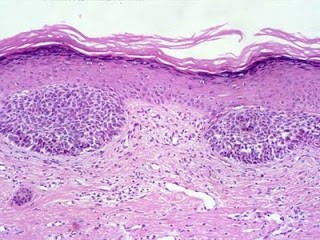
Secara harafiah, Neoplasia berarti pertumbuhan baru, dan pertumbuhan baru ini disebut neoplasma. Menurut Sir Rupert Willis seorang onkolog dari Inggris, neoplasma ialah massa jaringan yang abnormal, tumbuh berlebihan tidak terkoordinasi dengan jaringan normal dan tumbuh terus meskipun rangsang yang menimbulkannya/memulainnya telah hilang. Kepada sifat-sifat ini harus ditambahkan jaringan yang abnormal itu tidak mempunyai tujuan, merugikan penderitanya dan tumbuh otonom.
Sel neoplasma mengalami transformasi oleh karena mereka terus-menerus membelah. Hal ini berbeda dengan sel tubuh normal yang pembelahannya terkendali. Pertumbuhan atau perkembangan normal memerlukan sel tubuh yang memperbanyak diri (membelah, proliferasi) dalam keadaan terkendali dan seimbang, terbatas pada jumlah yang diperlukan oleh tubuh. Apabila kebutuhan telah terpenuhi maka pembelahan sel akan berhenti.
Sel neoplasma bersifat parasitik dan pesaing sel atau jaringan normal atas kebutuhan metabolismenya pada penderita yang berada dalam keadaan lemah. Neoplasma bersifat otonom, karena ukurannya meningkat terus, meskipun hal ini bergantung kepada kondisi setempat. Bergantung kepada pemenuhan kebutuhaan darah dan makanan, bahkan pada neoplasma tertentu diperlukan dukungan hormonal/endokrin.
Proliferasi neoplastik menimbulkan massa neoplasma, menimbulkan pembengkakan/benjolan pada jairngan tubuh, membentuh tumor. Istilah tumor mula-mula dipergunakan untuk pembengkakan akibat radang, pembengkakan oleh sembab jaringan atau pendarahan. Jadi tumor berarti untuk sekarang berarti neoplasma yang menurut sifat biologiknya dibedakan atas tumor jinak dan tumor ganas. Semua tumor ganas disebut kanker (cancer).
This is an example post, originally published as part of Blogging University. Enroll in one of our ten programs, and start your blog right.
You’re going to publish a post today. Don’t worry about how your blog looks. Don’t worry if you haven’t given it a name yet, or you’re feeling overwhelmed. Just click the “New Post” button, and tell us why you’re here.
Why do this?
The post can be short or long, a personal intro to your life or a bloggy mission statement, a manifesto for the future or a simple outline of your the types of things you hope to publish.
To help you get started, here are a few questions:
You’re not locked into any of this; one of the wonderful things about blogs is how they constantly evolve as we learn, grow, and interact with one another — but it’s good to know where and why you started, and articulating your goals may just give you a few other post ideas.
Can’t think how to get started? Just write the first thing that pops into your head. Anne Lamott, author of a book on writing we love, says that you need to give yourself permission to write a “crappy first draft”. Anne makes a great point — just start writing, and worry about editing it later.
When you’re ready to publish, give your post three to five tags that describe your blog’s focus — writing, photography, fiction, parenting, food, cars, movies, sports, whatever. These tags will help others who care about your topics find you in the Reader. Make sure one of the tags is “zerotohero,” so other new bloggers can find you, too.

 Lusiana's Blog